SERGEI CHEPIK
This is the official site of the Russian-born artist Sergei Chepik
click on the photos to have full image
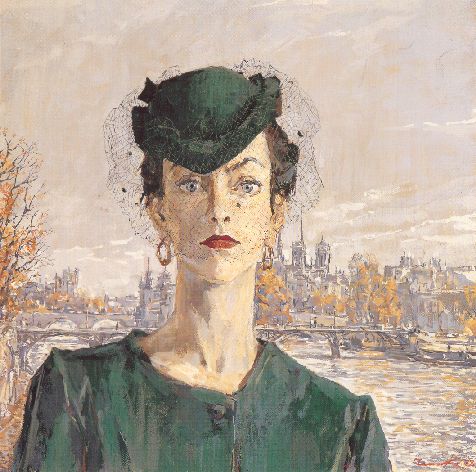
Since leaving the former Soviet Union in 1988, Sergei Chepik has firmly established himself as one of the leading living Russian artists. Three months after taking up exile in Paris, his first major masterpiece, The House of The Dead (1987) won the Gold Medal at the Salon d'Automne. The following year, The Tree (1982-1984) was awarded the Monaco City Award. Since, critics have hailed him as "a searing visionary" and "a genius", and Baroness Margaret Thatcher and Rudolf Nureyev (1991-1993) have agreed to pose for him.
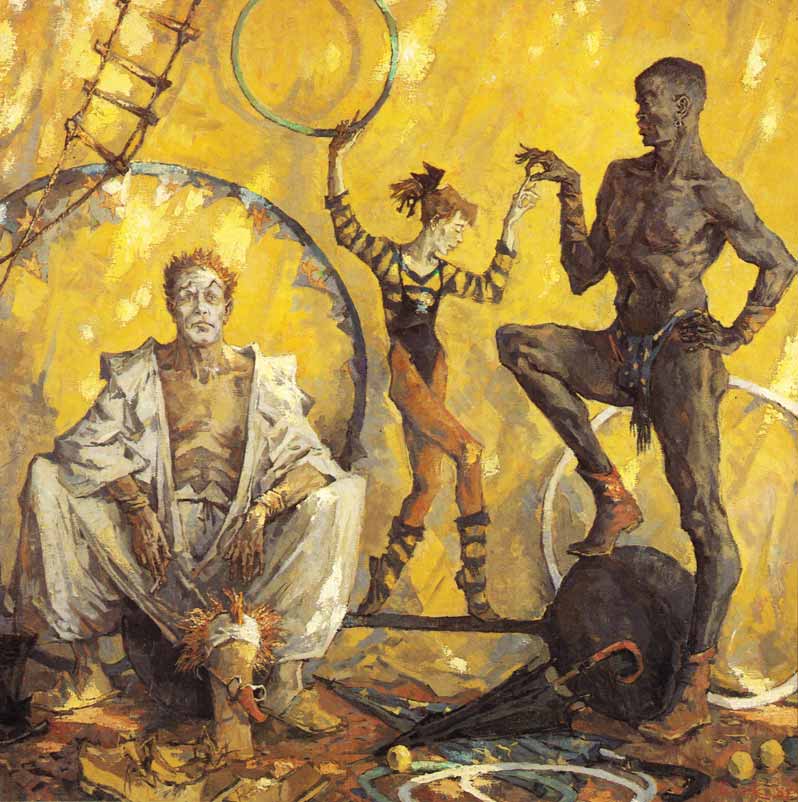
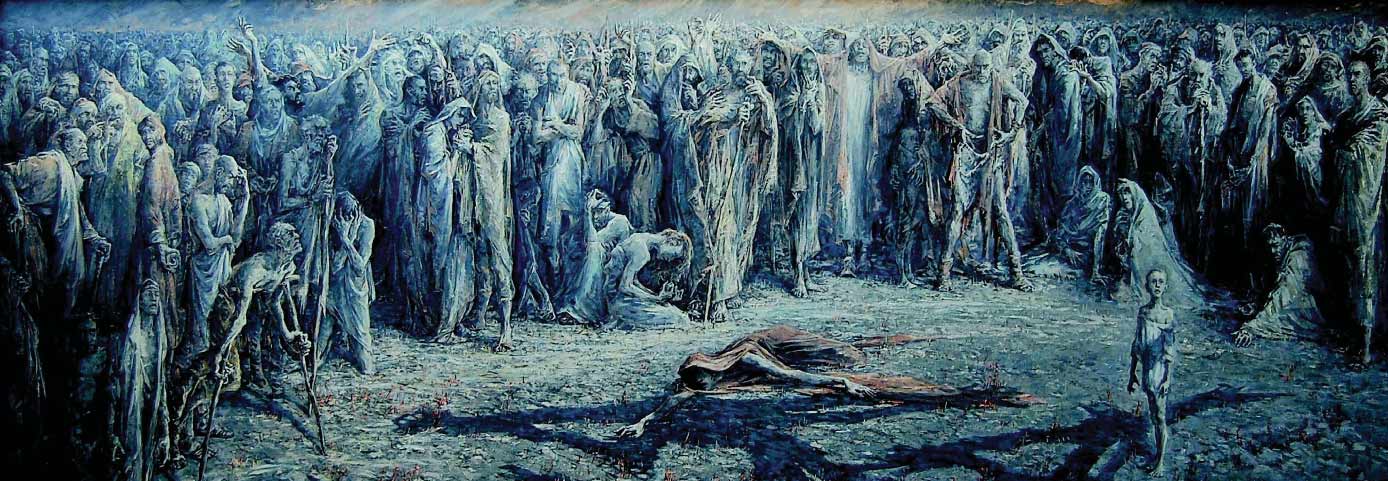
The force of many of his paintings is unrivalled by any other artist alive today. Works such as The Foreign Towns (Loneliness) (1993) or Golgotha (1996) provoke an unforgettable emotional reaction in the onlooker. His vision of the world is quite uncompromising. He has the courage to confront reality head-on and endows his work with both immense truth and powerful sense of drama. Yet, all is not bleak in his universe. For Chepik, the master technician, is capable of great variety and can pass with great ease from a work of social critique to delicately pretty watercolours of Provence or Italy, depictions of a Russian or Venitian carnival which simply burst out with colour, and self-portraits which can embrace both the figurative and abstract in one painting.
Quite naturally, Russia has proved to be one of his greater sources of inspiration. In the past he has dealt with subjects such as Petrushka (1984-1986), The House of the Dead (1987), The Foundation of Saint-Petersburg (1989), Ivan the Terrible (1990), Memories (1989). Since the beginning of the Nineties, he has regularly come back to the theme of the Troika, evoked by Gogol at the end of the Dead Souls. It poses the question: "Just where is Russia heading?" Not surprisingly, each version from Troika (1991) is invariably chaotic and torturous. And each new painting on Russia, Red Square (1993-1994), Chechnya (1997), and his last masterpiece The Cross of Russia (1999) offers a tragic but almost inevitable conclusion: the imminent destruction of Chepik's motherland.
(Ian Phillips)
Other Chepik-related link :
- Plathey's Personal Home Page
all pages (c) Chepik 2007